
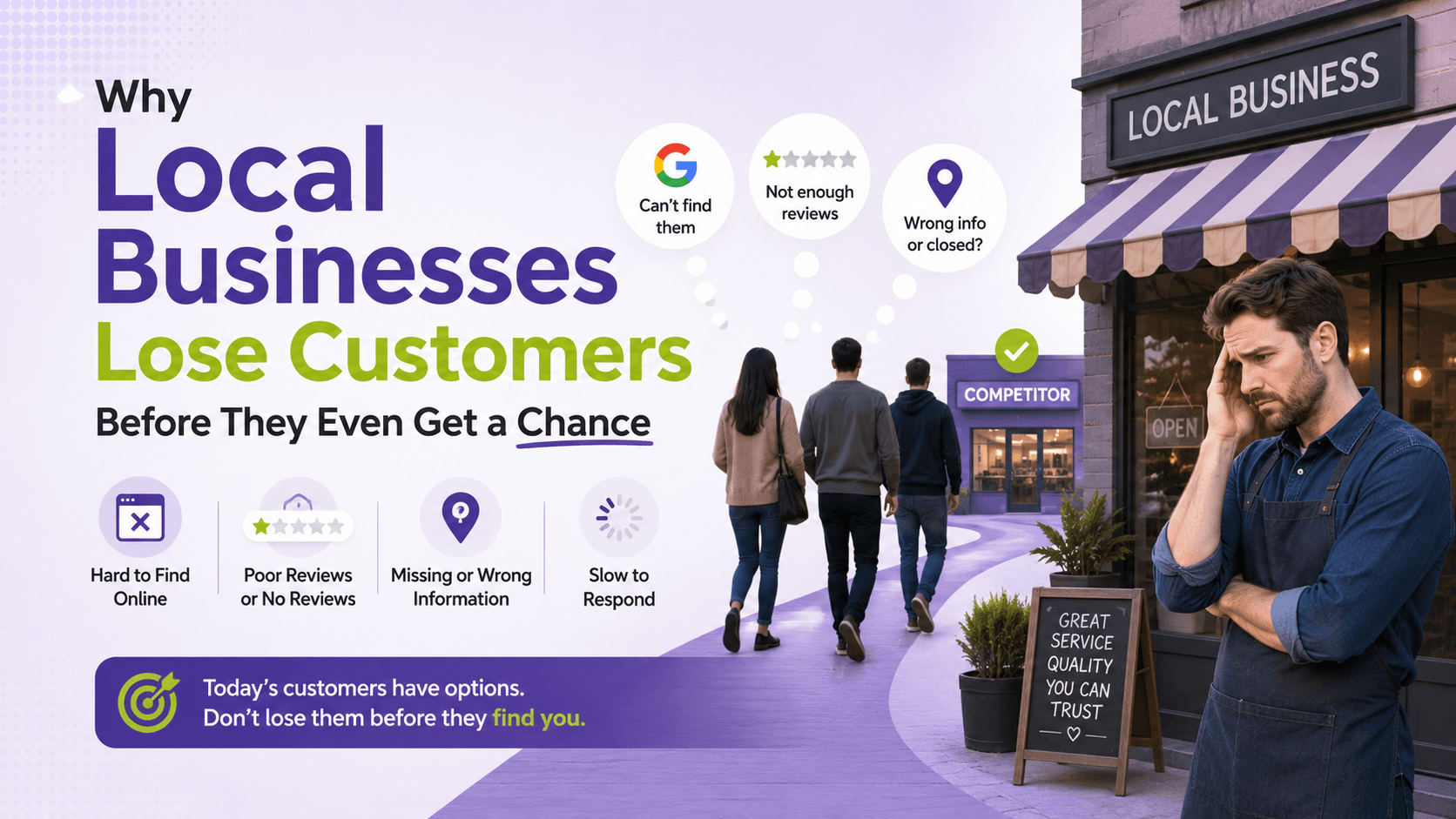
Why Local Businesses Lose Customers Before They Even Get a Chance

Why Local Businesses Lose Customers Before They Even Get a Chance

The Invisible Wall Keeping Local Customers Away From Your Business

You ever notice how some businesses seem to have customers walking through the door non-stop while others sometimes with better products struggle to get foot traffic? The difference isn’t always what’s inside the four walls. More often than not, it’s what’s happening online before a customer ever sets foot in your shop.

Here’s the thing: when someone in your city searches for what you sell, they’re making decisions in seconds. If your business isn’t showing up where they’re looking, you’re not just missing an opportunity you’re actively losing customers to competitors who bothered to get their digital presence right.

Where Customers Actually Look First

Most business owners assume their website is enough. It’s not. When people search for local services, they’re checking multiple sources. Google Business Profile, review sites, and business directories all factor into their decision. They want to see consistent information, recent reviews, and proof that you’re a real, operating business.

If your phone number appears differently on your website than it does on your directory listing, that’s a red flag. If your hours are outdated, customers get frustrated. If you’re not listed at all, they assume you don’t exist or aren’t serious. That’s the invisible wall inconsistency and absence.

The Trust Factor That No One Talks About

Customers don’t just buy products; they buy peace of mind. They want to know you’re legitimate, that other people have had good experiences, and that you’ll be around if something goes wrong.

A complete business profile on a trusted platform like Trusted City Businesses does more than just list your name and address. It signals that you’re established, vetted, and worth considering. When people see your business alongside other verified local companies, it creates an instant credibility boost that no amount of website copy can replicate.

Small Fixes That Make a Big Difference

Fixing your local visibility doesn’t require a massive marketing budget. Start by ensuring your Name, Address, and Phone number (NAP) are identical everywhere you appear online. Then, claim and complete your profiles on relevant directories. Add photos, respond to reviews, and keep your hours updated.

Think of each directory listing as a digital handshake. Every time someone finds you on a platform like Trusted City Businesses, that’s a first impression. Make it count.

Local customers are searching for you right now. The question is whether they’re finding accurate, trustworthy information or hitting that invisible wall and moving on to your competitor. Get your citations right, build your digital presence with intention, and watch how many more customers actually walk through your door.

Frequently Asked Questions

How many business directories should I be listed on?

Quality matters more than quantity. Start with the major ones like Google Business Profile and a few trusted local directories. Make sure your information is consistent across all of them before adding more.

Do citations really help with local SEO?

Yes. Citations confirm to search engines that your business is real and operating in a specific location. Consistent citations across multiple platforms build trust and improve your local search visibility.

What's the difference between a citation and a directory listing?

A citation is any mention of your business name, address, and phone number online. A directory listing is a specific profile you create on a business directory platform. Directory listings are one type of citation.

How long does it take to see results from directory listings?

You might notice changes in a few weeks, but consistent improvements build over several months. The key is keeping your information updated and earning positive reviews.

Can I list my business if I work from home?

Yes, many directories allow home-based businesses. Just be transparent about your service area and use your actual location if you meet customers there, or specify that you serve a particular region.